Monday, March 21, 2011

Analyzes IX (Chapter 3)

"With a father like Unoka, Okonkwo did not...compatible life and shameful death."


Okonkwo's relentless drive to improve his reputation is commendable. He's willing to sacrifice anything just to gain the title and status of a legend. It surprises me that a man with this much motivation can come from just refusing to be like his father.

"No daddy! I wanted Velcro!"

Analyzes VIII (Chapter 2)

"Okonkwo had just blown out the palm-oil lamp and stretched himself on his bamboo bed when he heard the ogene of the town crier piercing the still night air. Gome, gome, gome, boomed the hollow metal. Then the crier gave his message, and at the end of it beat his instrument again."


With the ogene being symbolized as a drum, it's clear that they use this as a tool to convey messages across tribes. What surprises me is Okonkwo's lack of reaction or emotion to the "piercing cry." I assume that the ogene signal is a very frequent sound in the village.

Unlike other instruments that convey messages.

Analyzes VII (Chapter 1)

"One day a neighbor called Okoye came in to see him...He immediately rose and shook hands with Okoye, who then unrolled the goatskin which he carried under his arm, and sat down. Unoka went into an inner room and soon returned with a small returned disc containing a kola nut, some alligator pepper and lump of white chalk."


It's interesting to say that the culture of Okonkwo's tribe is very intriguing.  I'm very interested on what the items represent themselves as. Is it required to have goatskin when someone visits another? Of course, there are a lot more questions than this.
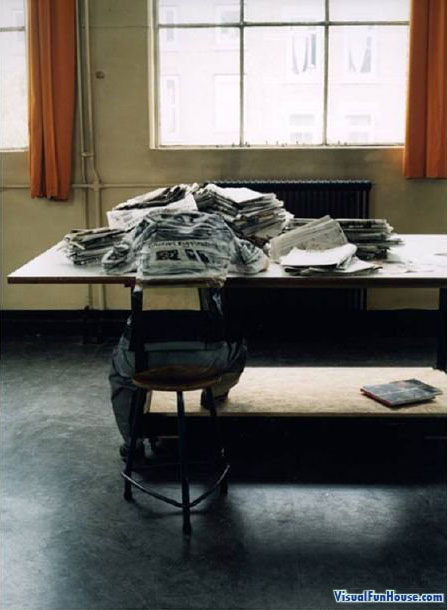
"Please place the acorn on that stack of paper."

Analyzes VI (Chapter 25)

"He had already chosen the title of the book, after much thought: The Pacification of the Primitive Tribes of the Lower Niger."

Being the last sentence of the novel, the reader is shown the Western perspective of Nigeria and it's tribes. It also seems that the person acts like he knows all about the tribes, since that they (the white men) is the number one reason why the tribes are in distress. It's interesting that the author had the man say the novel title because he has absolutely no idea what happened to Okonkwo before he committed suicide.
"My god, this man was a womanizer!"


Saturday, March 19, 2011

Things Fall Apart Extended Activites

Part 1
Imperialism is the action of a country extending its power to rule over foreign countries.Europeans "justified" that imperialism as a means to gain new territories, which would produce a cause and effect to further open the world to free trade. 


Europe, at the time, strived for a location where natural resources were always available. Wielding the machinery of their time, Europe easily invaded and took control of Africa, viewing the world as opportunity.


Part 2


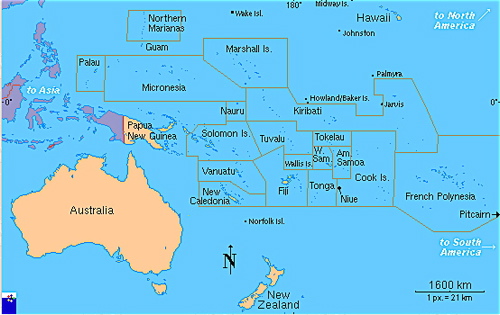
European colonization in Polynesia was motivated by the islands' rich resources from it's varying climates. The natives of Polynesia were victimized by the Europeans. Alien diseases were introduced on a massive scale, slaves were often made out of the natives, and Christian missionaries suppressed the Polynesian culture.


It was only later on, around the 1940's, that the islands of Polynesia started 
gaining independence.


Cohen, Sharon L. "About the Polynesian Culture | EHow.com." EHow | How To Do Just About Everything! | How To Videos & Articles | EHow.com. Web. 19 Mar. 2011. <http://www.ehow.com/about_5406831_polynesian-culture.html>.
"Imperialism & Colonialism." Fresno Unified School District. Web. 19 Mar. 2011. <http://www.fresno.k12.ca.us/divdept/sscience/history/imperialism_colonialism.htm>.

Thursday, February 17, 2011

Introduction

Okay let's hop right into this thing. Things Fall Apart by Chinua Achebe, who is, um...
                                                             THIS GUY!


Upon noticing the colorful cover that has tribal statues and shapes, I assume this book is focused on Africa. Diving deeper into the book, I realize the setting is in Nigeria. Let's just hope it's interesting.

Analyzes V (Chapter 20)

"How do you think we can fight when our own brothers have turned against us?"


After Okonkwo's seven year banishment, he finally returns to his home tribe, only to find out that it has changed completely due to the church that the white man has built. Enforcing rules of judicial systems and harsh rules, turning most of the tribesman on the white man's side. Angered, Okonkwo questions his clan, calling them cowards, only for them to use the quote above.

In my mind, Okonkwo seemed to think he was going to return back to his tribe and  be the "top dog". Boy, was his vision shattered. I mean, the man spent seven years in banishment. He was anticipating this day for a LONG time.

                                         Maybe he was a LITTLE more than anxious...

Analyzes IV (Chapter 13)

If karma was a plant, then Okonkwo must've been raising one in his left eye. After the death of one of the tribe's higher-ups, a funeral is held where music is loudly play and guns are fired. In a series of events, Okonkwo's gun explodes when fired and the shrapnel from the gun pierces the dead man's sixteen-year-old son. 
                        At least he didn't shoot a person that was not wearing an orange vest.

With the thought of killing a fellow tribesman is a crime against the earth goddess, Okonkwo is exiled from his tribe, along with his wives and children, for seven years. Honestly, the guy had it coming to him.

Analyzes III (Chapter 7)

You know how the phrase goes, 'you can't judge a book by its cover'? Well, Okonkwo thinks the opposite. He WANTS to be judged by how he looks, how he acts around people and react in situations. One of these situations is when the boy from the rival tribe is supposed to be killed. The boy was told that he had to "supposedly" go back to his home tribe. Now, the boy has become something as a son to Okonkwo, who looks at Okonkwo as a father. After being sliced with a machete by a tribesman, the boy runs to Okonkwo for help. Feared of being viewed as a coward in front of the others, Okonkwo cuts down the boy with his own machete.
                  It is not widely known that there is a slice of cake at the bottom of the mountain.


It is here that I have established Okonkwo as a  maniacal, boasting sociopath.

Analyzes II (Chapter 5)

So it comes down to it that Okonkwo hates his father and everything he stands for. Walking around in supressed anger, he just aimlessly waits to have an outlet. It got to the point where he grabbed his gun, aimed it at his second WIFE, and pulled the trigger. Sounds to me like someone has some issues to solve.
                           Aww, ain't he just the cutest thin- Oh god, he gnawing off my ankle!


It should be noted that his second wife was not harmed by the gun. Or any rodent, for that matter.

Analyzes I (Chapter Two)

" 'Umuofia kwneu, ' he bellowed a fifth time, and the crowd... Umuofia was feared by all its neighbors."


I find this to be oddly strange. In chapter two, it talks about how a woman from Okonkwo's, the main character, tribe was murdered by another tribe. It kind of blows my mind on how perceptual these tribesman are. I mean, if I were to have a platoon of soldiers against a whole entire army, I would just leave them the hell alone.


                                               Or in the French Army's case; run away.


And now the tribe that murdered the woman has to give up a child from their tribe to pay as compensation. Not very smart.